
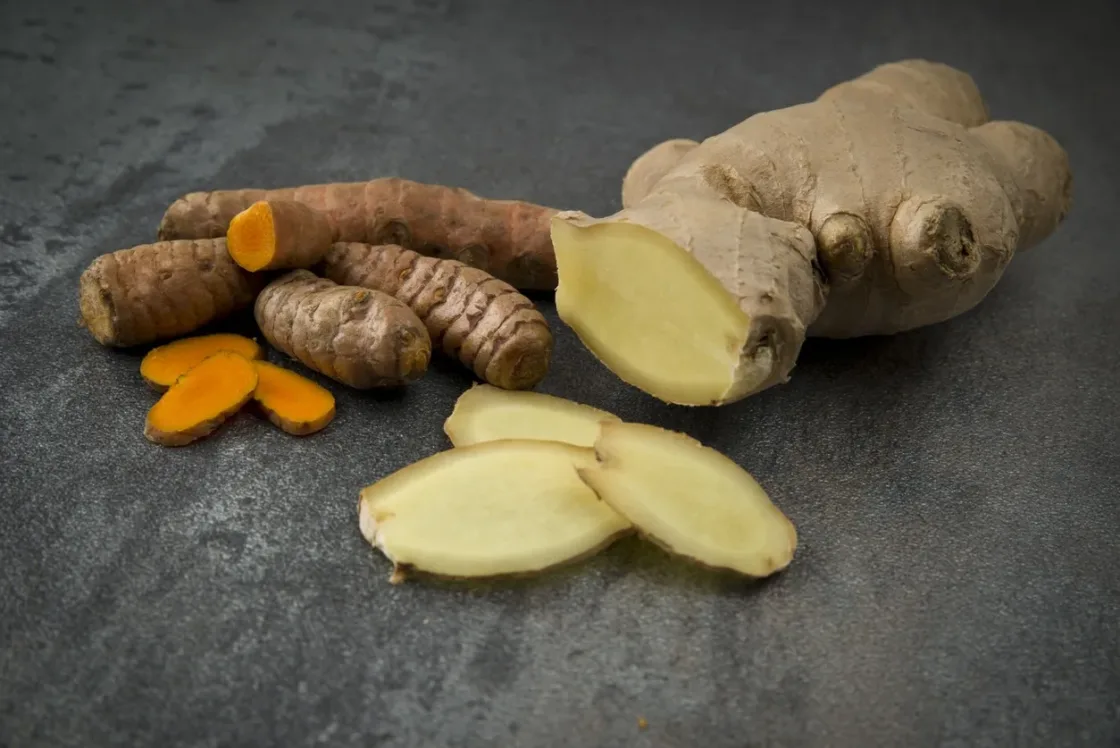
Fresh ginger and turmeric bring distinct flavors to fall and winter restaurant menus. Ginger adds aromatic heat, while turmeric contributes earthy flavor and golden color. Understanding how to select, prepare and store these ingredients helps chefs use them consistently in soups, curries, vegetable dishes and seasonal beverages.
For restaurant operators planning cooler-weather specials, these versatile ingredients offer opportunities to build flavor across several dishes without introducing a long list of additional products.
What Is the Difference Between Fresh Ginger and Turmeric?
Ginger and turmeric are rhizomes, meaning underground stems, although both are commonly called roots. Their culinary roles differ.
Fresh ginger has a pungent, spicy character that works in savory dishes, sweets and beverages. Grated ginger can become part of a curry base, while sliced ginger can infuse a broth or tea.
Fresh turmeric brings an earthy, slightly bitter flavor and distinctive yellow-orange color. It complements lentils, rice, vegetables and sauces, particularly in Indian and other Asian preparations.
Use ginger when a recipe needs aromatic heat. Choose turmeric when earthy depth and color are central to the dish. They can also work together, with quantities adjusted to keep either flavor from dominating.
How Should Chefs Select Fresh Ginger and Turmeric?
Start with firmness and overall condition. Choose ginger with smooth skin, a strong aroma and a plump appearance. Avoid pieces that look withered or have cracked skin.
Fresh turmeric should also feel firm. Reject soft, shriveled or visibly moldy pieces. Color alone does not establish freshness, so receiving teams should evaluate texture and condition alongside appearance.
For wholesale produce purchasing, consider preparation requirements as well as case price. Evaluate how easily each delivery can be cleaned, trimmed and portioned. Recording usable yield helps operators compare actual ingredient costs and establish more accurate recipe pricing.
How Do You Prepare Fresh Ginger and Turmeric?
Wash produce before preparation, then trim and peel as needed for the application. A spoon can help remove ginger skin around uneven curves without cutting away excessive flesh.
Match the cut to the intended result. Finely grated ginger works well when distributed throughout a sauce or marinade. Thin slices suit infusions that will be strained, while matchsticks provide a more noticeable texture.
Fresh turmeric can be grated into sauces, soups and rice preparations. Its pigment can stain hands, equipment and work surfaces, so plan a designated preparation area and clean promptly.
Fresh and ground forms should not automatically be substituted in equal amounts. When adapting a recipe, test a small batch and record ingredient weights, cooking time and finished flavor before scaling for service.
Where Do Ginger and Turmeric Fit on Seasonal Menus?
Fall and winter provide a useful menu context for these ingredients, especially in comforting dishes and warm drinks. Consider testing:
- Soups: Add ginger to a carrot or squash soup, or introduce turmeric into a lentil soup.
- Vegetable entrées: Build a ginger-seasoned eggplant curry served with rice and a cooling yogurt accompaniment.
- Seasonal sides: Try turmeric-roasted cauliflower or ginger-glazed carrots alongside an existing entrée.
- Beverages: Develop a ginger tea with lemon or a turmeric milk beverage with a carefully balanced spice blend.
These are menu development ideas rather than standardized recipes. Test seasoning, portion size and holding performance in your kitchen before adding a special to the menu.
For catering, taste dishes after the expected holding period so the final service experience guides recipe adjustments.
How Should Restaurants Store Fresh Ginger and Turmeric?
Refrigerate fresh ginger in suitable wrapping or a food storage bag. Keep fresh turmeric refrigerated, using paper towels and appropriate packaging to manage excess moisture.
Inspect inventory regularly and rotate stock so older, sound product is used first. Label prepared batches and follow your kitchen’s established food safety procedures.
Order against realistic usage rather than assuming every shipment will deliver the same storage life. Product condition, handling and preparation affect how well ingredients perform over time.
Plan Your Next Seasonal Produce Order
Before introducing a special, identify where ginger or turmeric can support another existing menu item. Shared ingredients can simplify purchasing, provided each dish maintains its intended flavor. This approach gives chefs a practical foundation for seasonal creativity while keeping daily kitchen execution manageable.
Om Produce supplies fresh produce, dry grocery and dairy for South Asian and Indian cooking. Explore our product categories, then contact our team to discuss ingredient availability and ordering needs for your fall and winter menus.